CHILOQUIN GREEN SCHOOLYARD
Chiloquin, Oregon
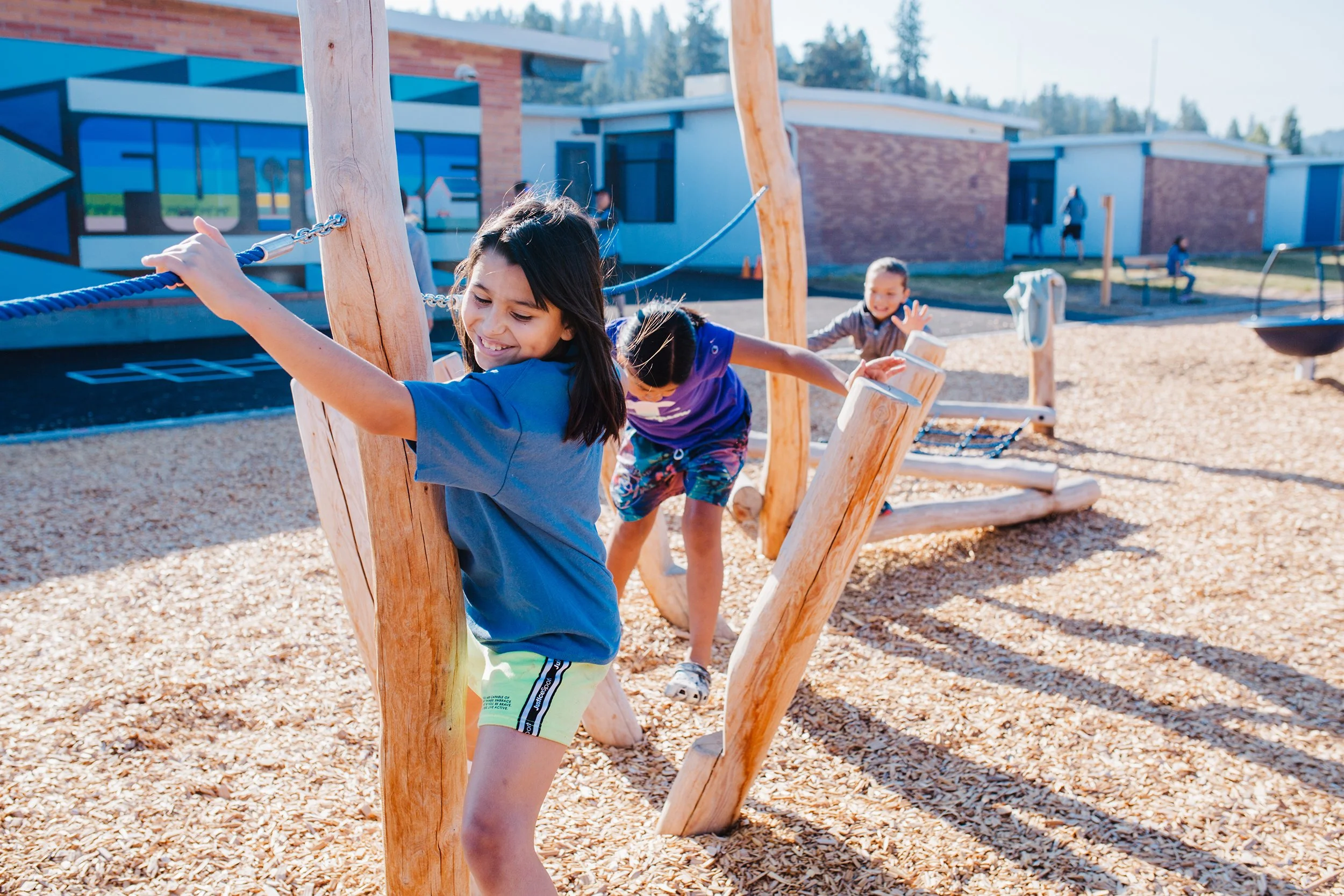
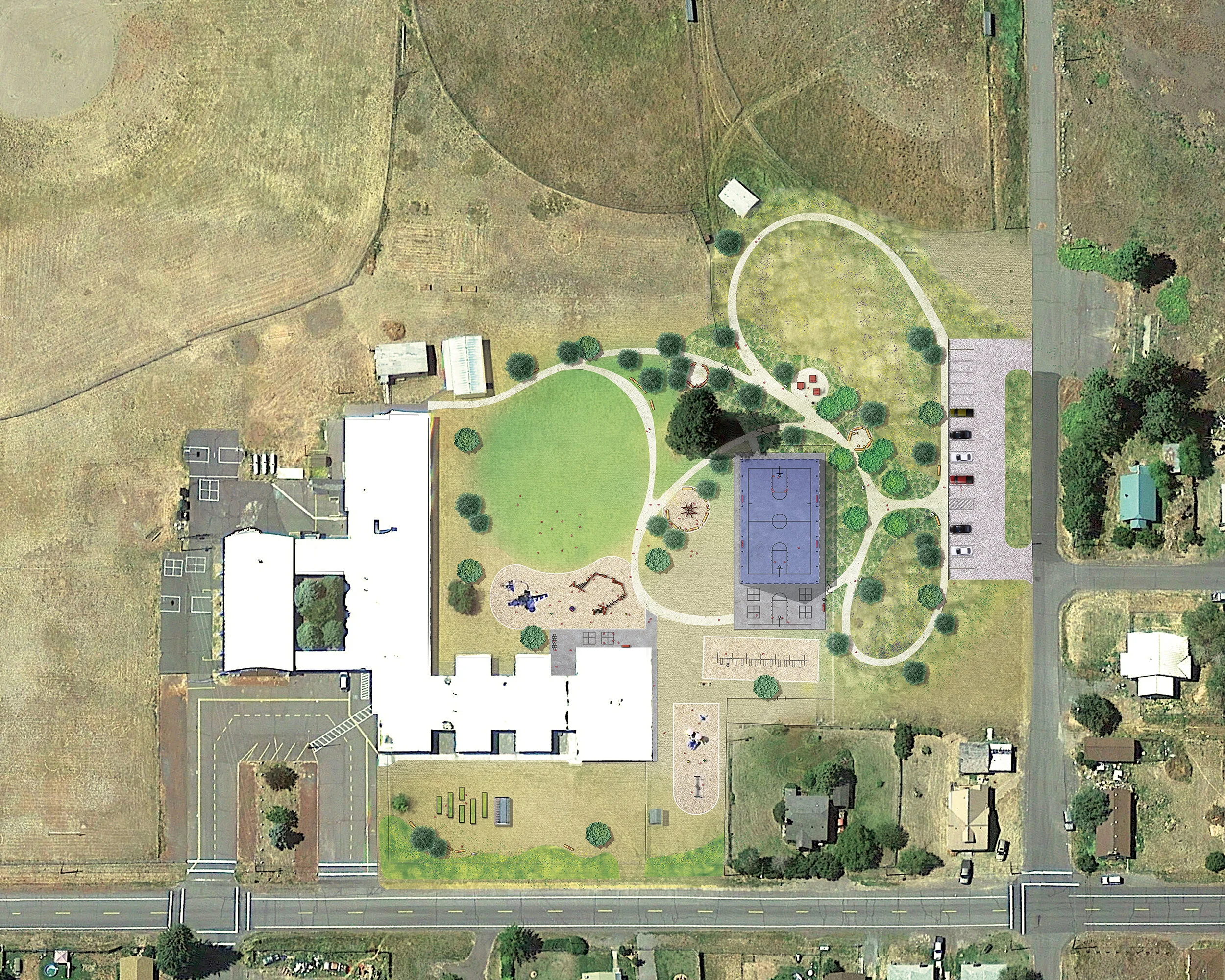
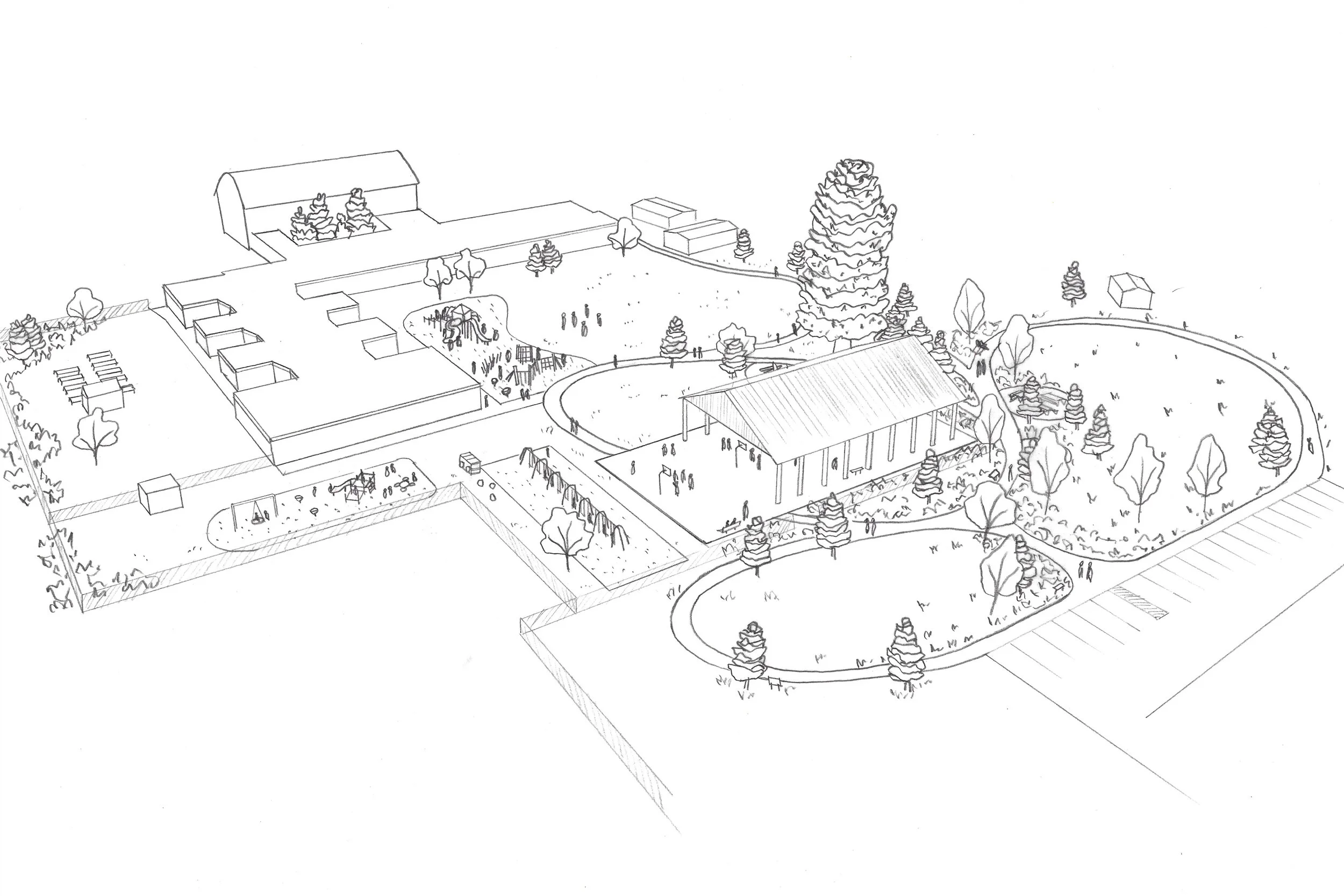
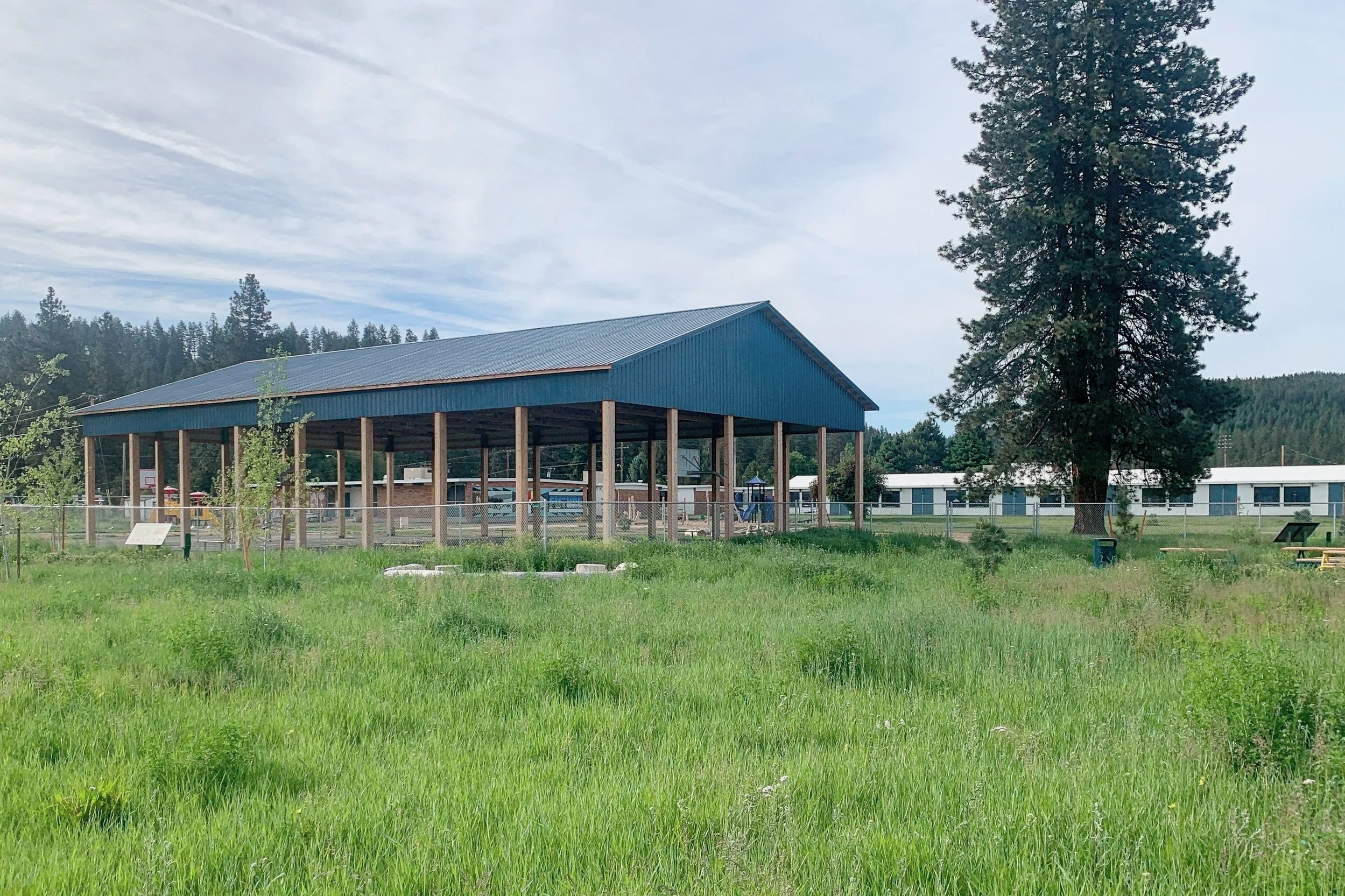
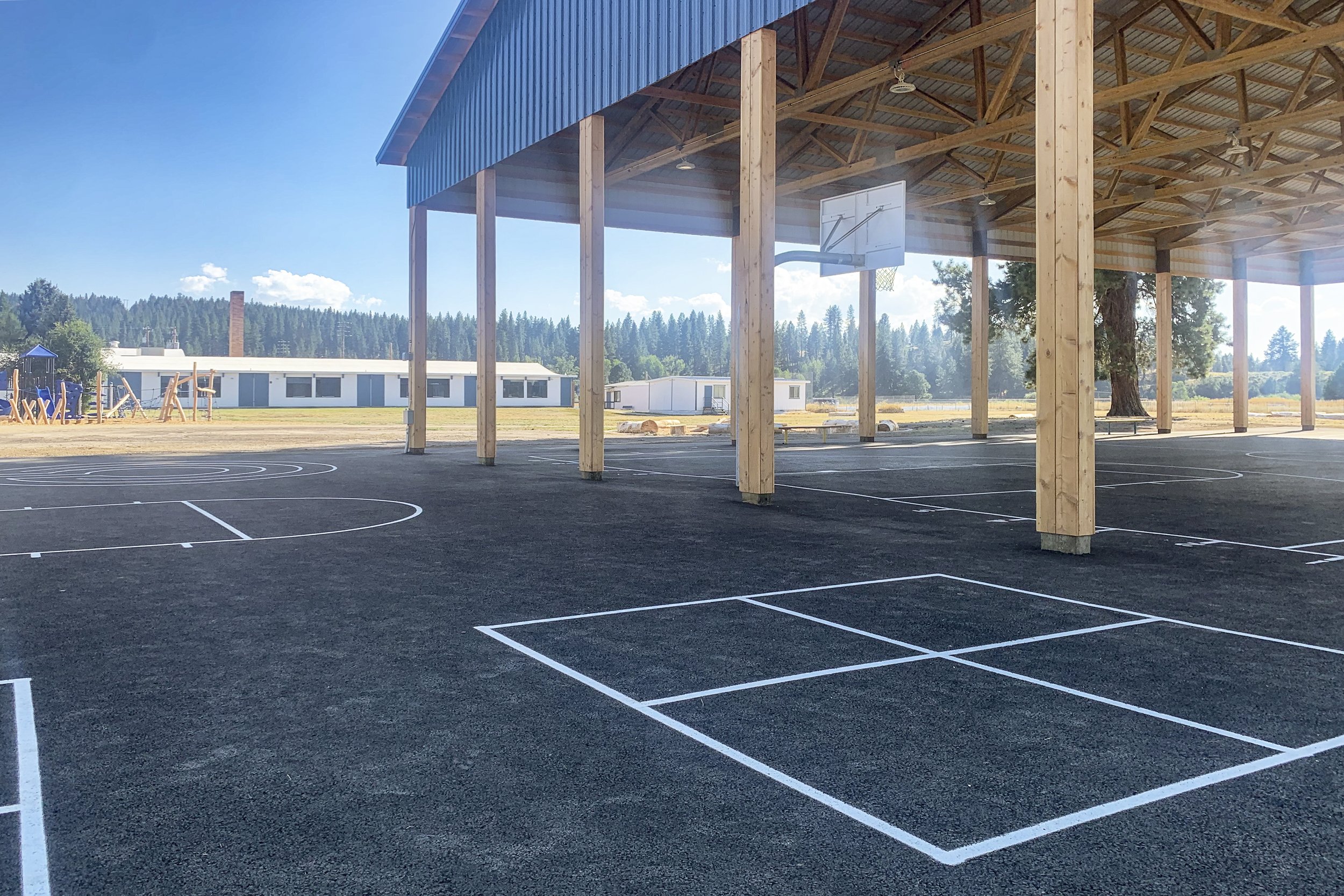
As it sits by the confluence of two rivers, the site of Chiloquin Elementary School has long been a place of gathering, a place occupied by the Klamath people from time immemorial. Today, the school grounds are the heart of the community where educational and cultural moments come together. To inspire a stronger pride of place for children in Chiloquin, ABLE worked with the community to reimagine the schoolyard as a safe space for the entire community to gather, play, and learn. The schoolyard design centers the new covered basketball court on the site as a year-round community hub to host an expanded set of activities from sports to celebrations. Large swaths of Ponderosa pines, Oregon white oak, native meadow, and sagebrush shrubland along with walking paths frame new play and gathering spaces for the patterns of everyday life.
Through conversations with tribal elders, we heard a common thread: the need to pass along knowledge of traditional plant use to future generations in order to steward the land and keep the culture of the Klamath people alive. Together, we crafted the planting palette to include signature species such as Prunus virginiana (doycq’as, chokecherry) and Prunus subcordata (dmolo, Klamath plum) and created a signage trail to honor the ethnobotany of the region telling the connection between people and plants.
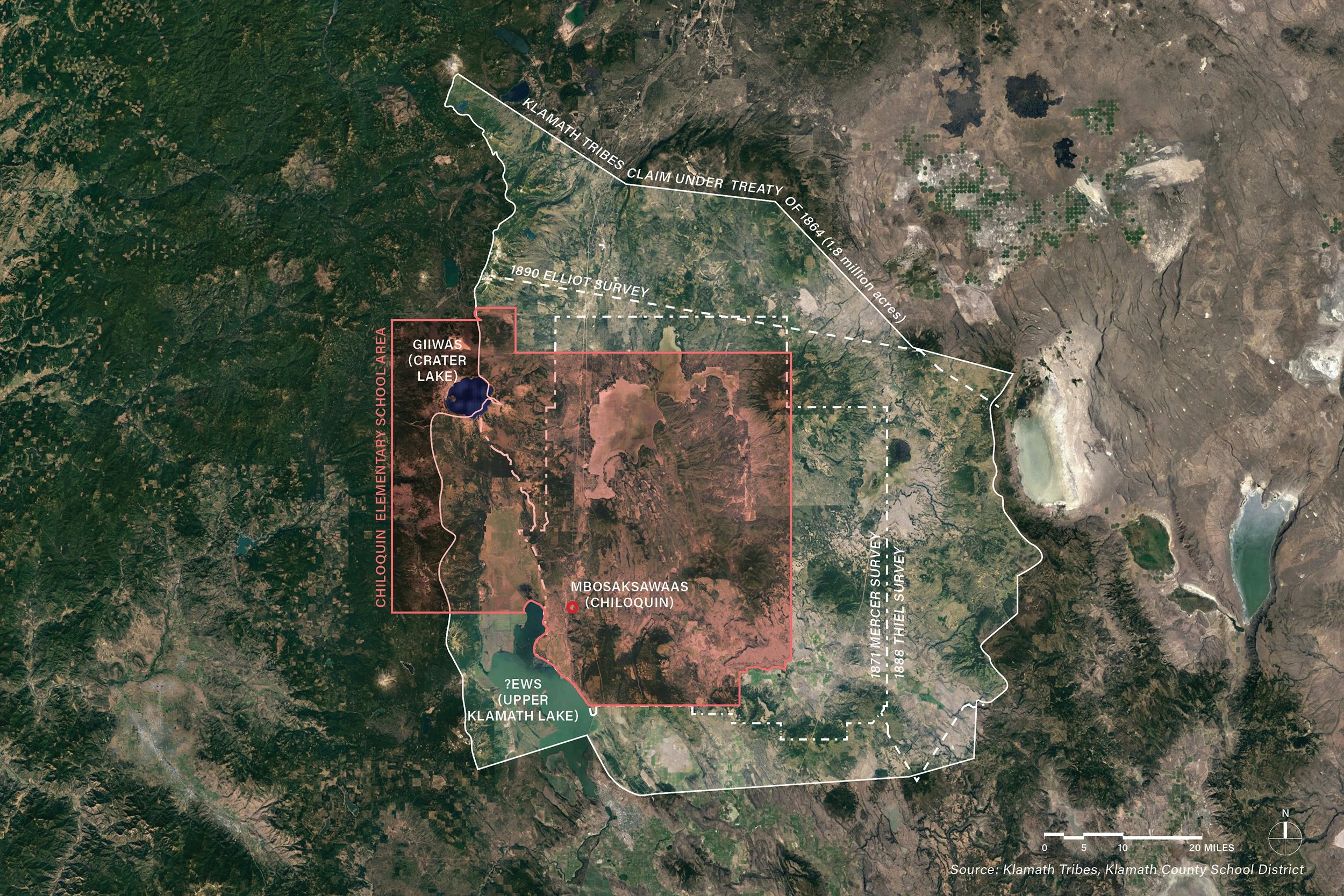
Chiloquin Elementary School sits on the ancestral lands of the Klamath, Modoc and Yahooskin people, adjacent to the current headquarters of the Klamath Tribes.
This project was designed in collaboration the Trust for Public Land and Klamath County School District with valued input from the staff, teachers and students of Chiloquin Elementary, community members and Klamath Tribal staff and community. ZCS Engineering & Architecture provided engineering support. The signage was created with insight from several Klamath elders, graphic design by Elizabeth Skolman, text by Jade Souza, and language translation by Harold Wright. This project wouldn’t be possible without the enthusiasm and commitment of Art Ochoa.
Construction was completed in 2022.
Photos by ABLE and Trust for Public Land.





Existing Site